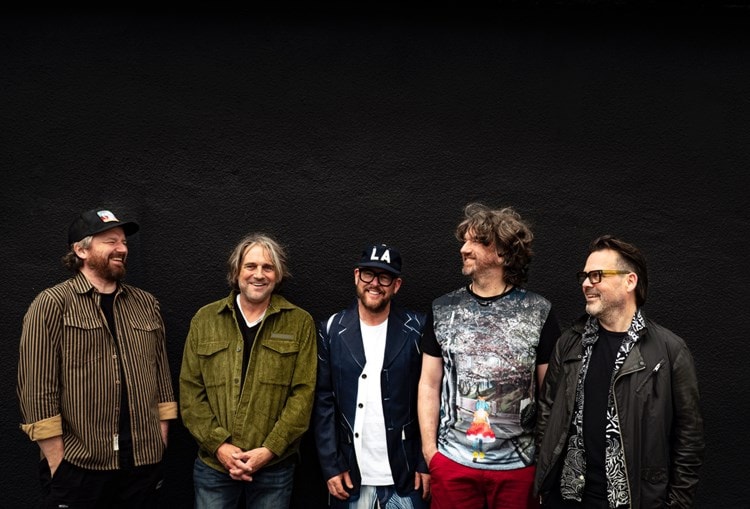
Thirty years into their career, Embrace are still looking forward.
Thirty years into their career, Embrace are still looking forward.
While anniversaries and retrospectives often invite bands to look backwards, Avalanche finds the band doing the opposite. The new album explores presence, mental health and the freedom that comes with accepting uncertainty, while still holding onto the emotional honesty and anthemic songwriting that have always defined Embrace.
We caught up with Danny McNamara to talk about the journey behind Avalanche, confronting OCD in his songwriting and why Embrace are still more interested in what comes next than looking back.
Where does Avalanche sit in the overall Embrace story for you?
It's the third in a trilogy of albums I've written since I met my wife, Love is a Basic Need, How to be a Person Like Other People, and now Avalanche. They're all connected by this journey I've been on over the last thirteen years, learning to actually be present in my own life.
I've always been a bit of a creative introvert, living inside my head, thinking about the next song or the next Embrace record rather than being in the actual moment. My wife changed that. Early on, she took me to this beautiful place, sort of the Asian equivalent of the Grand Canyon, and she wanted to stay for the sunset. I looked around for a couple of minutes, walked down to the bottom, back up to the top, and went, "yeah, this is really nice... shall we go get something to eat?" And she basically told me to sit down and shut the fuck up, because she wasn't going anywhere until the sun went down.
So I sat there, and at first I'm bored, thinking about what we're doing next. And then this moment hit me. I could smell the scorched grass, see the birds below us, feel the breeze, and it was really profound. I'd never had a moment like that before. It opened up a kind of floodgate. All these beautiful little moments I'd been missing my whole life suddenly came at me like an avalanche, which is why the title felt so right.
Does this album feel connected to earlier Embrace records, or like a fresh chapter?
Both.
The emotional honesty has always been there. That's the thread running through everything we've done. But the biggest change on Avalanche is that we stopped trying to figure everything out.
This album probably asks more questions than it answers. We let songs stay uncomfortable. We let them say "I don't know" or "I'm scared" or "this might never be enough." That felt more honest, open and raw than anything we've done before.
People who've heard the singles, "Road to Nowhere" and "Stop", know the big anthemic chorusy side, but there are some really heartbreaking ballads on there too, and some properly uptempo guitar heavy stuff.
It's recognisably Embrace, but it's a version of us that's made peace with not having all the answers, because in a way the questions are more interesting anyway.
Did making Avalanche remind you of any earlier period in the band?
Yeah, really strongly.
When Mick brought in the keyboard idea for "Get Out Of My Own Way," it instantly transported me back to just after we got our record deal, when we were suddenly in all these big studios in London like Abbey Road and Air Studios and Metropolis and Olympic. I could almost smell the speakers.
It took me right back to when I was working on Fireworks, and I realised I was close to the creative fire again. That made me really anxious, but in a good way. I was thinking "oh my God, we need to write loads more songs because I'm in the zone."
In the beginning I was quite instinctive but I didn't really know what I was doing. Now, thirty years on, I really do know what I'm doing. It's about listening to your instincts, trusting them, fine tuning them, and not bullshitting yourself. The sharper that gets, the better the work gets.
How has your relationship with songwriting changed since the early days of Embrace?
The biggest shift is that I stopped hiding behind distance and irony.
I hate music that's larded with irony, always have. On this record, I wanted to write from inside the feeling, whether that was love, panic, grief, obsession, or hope, and stay there long enough for it to tell the truth.
I found out quite recently that I have OCD. I had Pure O when I was younger and didn't even know it, because it wasn't even really a thing back then in the late eighties. That diagnosis made a lot of things make sense and gave me a lot of power back.
Songs like "Pure O" and "Get Out Of My Own Way" are me being brutally honest about what it's like to live inside my head when it turns on me. There's no metaphor to hide behind. It's fingers in ears, eyes closed, fighting something that is literally you.
Writing that way felt risky, but strangely freeing.
Was there a shared feeling or idea that tied the whole album together?
There's a deep acceptance running through the whole record, that life is fragile, ridiculous, beautiful, terrifying, and short, all at once.
"Stop" was the song that set the bar and the tone right at the beginning. Rick sent me this piece of music and I just started writing a stream of consciousness about how we're all on a rock spinning thousands of miles an hour around a sun that's going millions of miles an hour in a universe going billions of miles an hour, from God knows where to God knows where.
And in a hundred thousand years everything you know and love, every building, every single thing, will just be a fine layer of calcium on that rock.
Once you really sit with that, a lot of the pressure disappears.
It doesn't depress me, it frees me.
If none of this is permanent, then stop messing about and get on with it. Phone your mum. Ask that girl out. Leave the job you hate. That feeling runs through the whole album.
What do you think Embrace does best as a band in 2026?
We show up with something new.
When the management and the label came to us about the thirtieth anniversary, they wanted greatest hits, retrospectives, and we were like, no, we've got a new album. They did the same thing at twenty years and we said the same thing.
I'm massively proud of what we've done. When they cut together a montage of all the hits before a radio interview, I listen back and think, actually, we're pretty fucking good at this.
But the reason I get up in the morning is because I'm still every bit as excited about the next new thing.
A lot of bands from my era are reforming or doing the festival circuit reliving past glories, and there's nothing wrong with that, but it's not what I'm about. I'm already working on the next album. I've already got a list of songs.
I want to know what's over the next hill.
Does making music get easier or harder with experience?
The craft gets easier.
In the beginning I was quite instinctive but I didn't really know what I was doing. Thirty years on, I really do. It's about listening to your instincts, trusting them, fine tuning them, and not bullshitting yourself.
But the vulnerability should get harder, and on Avalanche it did. Writing about my mental health with no metaphor to hide behind isn't easy. But I think if it's getting too comfortable, you're probably not being honest enough.
The thing people don't expect is that I'm more inspired now than maybe ever. Most bands' best albums come at the beginning, first time you fall in love, first time you get your heart broken, and then you get jaded.
I keep having epiphanies like I'm sixteen because I'm a slow learner. I'm in my fifties and I'm still learning stuff most people figured out in their twenties. Maybe that's bad for me, but it's probably good for the art.
Were there any risks you wanted to take on this record?
The biggest risk was the directness.
"Pure O" and "Get Out Of My Own Way" are about what it's like when your own head turns on you, and there's no poetic distance in those songs. It's raw and literal.
That OCD diagnosis was still quite fresh, and putting all of that into the songs felt exposing.
We also changed how we worked. Instead of taking one idea and grinding it until it's finished, Mick and Rick and sometimes Steve and Mike would bring me ideas, I'd work on melodies and lyrics, and then when we had enough, we'd get together as a band, three ideas a day instead of one.
It was a lot more fun and freeing, and we captured the live feel of the band because we were all in the same room getting excited about each new idea at the moment of inception.
You can hear it. Mike's excitement at the end of "Pure O," which we nailed in one take. He wanted to play it again anyway, did a second, made it better, and we stopped.
That energy's all over the record.
Is there anything about Avalanche that longtime fans might not expect?
I think the range might surprise people.
If you've heard the singles, you know the big anthemic side, but there are some really heartbreaking gentle songs in there too. "Deny" is one, "The Power" is another, and "Get Out Of My Own Way" is one of those big, thoughtful songs like "Fireworks" or "Drawn From Memory" or "All That Remains."
There's also stuff that's just human and unguarded in a way we haven't been before.
There's a bit at the end of "Funny" where I'm just ad libbing. I'd written all these lyrics, spent ages honing what I wanted to say, and then the most eloquent moment was this ad lib where I started laughing.
If you turn it right up with headphones on you can hear me cracking up. We kept it in.
The whole album is full of moments like that, rough, alive, caught in the moment.
What do you feel this album says about where Embrace are today?
That we're not done.
That we're not a nostalgia act.
We've been rehearsing the new songs for the gigs we've got coming up, and the vibe goes up whenever we do them. That hasn't really happened since Out of Nothing.
Our manager said it's possibly our best album since Out of Nothing, and he hardly ever says anything nice, he holds his cards very close to his chest, so when he says something like that, it really means a lot.
I think songs like "Coming Home" and "Get Out Of My Own Way" are going to become big fan favourites.
There seems to be a real renaissance happening. We're playing bigger places, things are selling out faster than they have in years. But more than the numbers, Avalanche says we're still here because we want to be.
One day everything we've ever known will just be a fine layer of calcium, and there's nothing we can do about that.
So you might as well be honest, stop messing about, and make the album you actually want to make.
How do live performances influence the way you write music?
The live energy has always been a real strength for this band, and on Avalanche we deliberately went after that.
The new process, getting together as a band with three ideas a day rather than one, meant we could capture the live feel because we were all in the same room, getting excited about each new idea at the moment of inception.
That makes the album a lot more lively, a lot more like we are on stage.
When people look back at Avalanche, what do you hope they remember about it?
I hope they remember it as honest.
Not perfect, not definitive, just honest.
This album is about life being too short, so stop messing about and get on with it.
I spent most of my life not noticing the little moments of magic. I was always in my head, always somewhere else. And when I finally did notice them, they came at me like an avalanche.
It was like being blind my whole life and suddenly having a veil lifted.
If someone listens to this record and it makes them slow down for a second, notice something small and beautiful they would have missed, then it's done its job.
That's all we were after.
Shop Embrace's new album 'Avalanche' below.

SHOP NOW
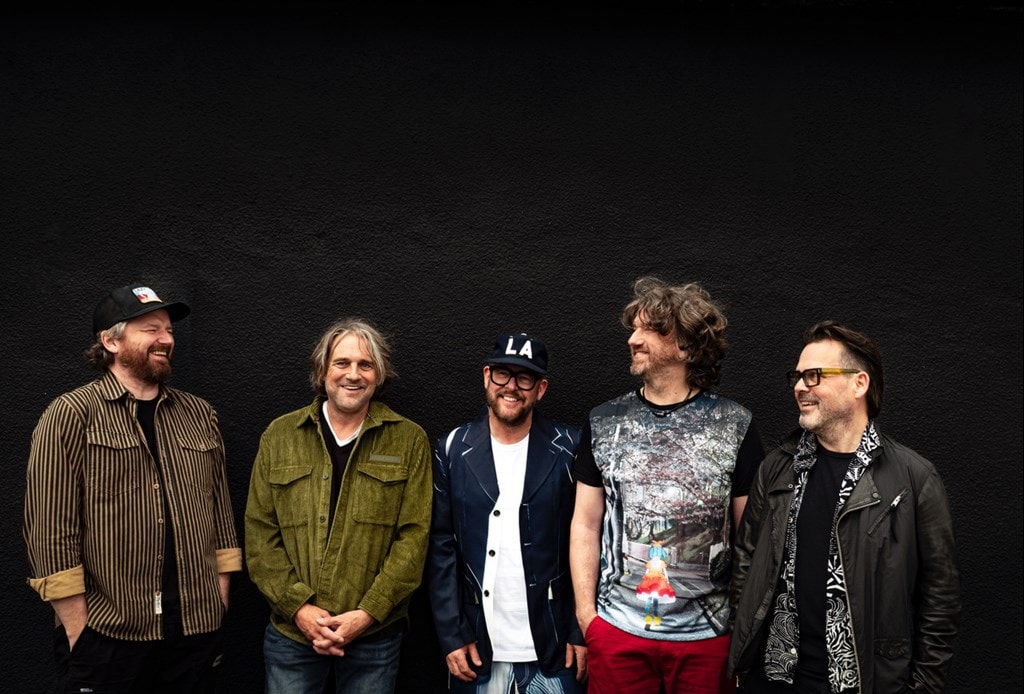
Photo Credits to Simon Walker.